Beneath the common thing as a pair of chopsticks lies a tapestry of cultural stories, deeply intertwined with the history, customs, and lifestyles across many Eastern nations. Drawing inspiration from these traditions, curio has crafted and unveiled a collection of wooden chopsticks featuring lacquer accents, with a vision to bring the elegance of Vietnamese craftsmanship into modern living.
Many legends seek to explain the origin of chopsticks. One of the most enduring dates back to the reigns of Emperor Yaoand Emperor Shun (c. 2357–2207 BCE). During a time of devastating floods, the great Yu was entrusted with taming the waters and vowed not to return until the disaster had been overcome. Day and night, he devoted himself to the task, passing by his own home three times without stopping. Even his meals became a race against time. Freshly cooked food was too hot to handle with bare hands, yet waiting for it to cool meant delaying his mission. In that moment of urgency, he snapped two bamboo twigs from a nearby grove and used them to pick up his food. Legend has it that this simple act marked the birth of chopsticks – a design that has endured for thousands of years.
From those first two bamboo twigs, chopsticks have evolved into far more than a practical eating utensil. They embody a philosophy of life deeply rooted in Eastern thought. Traditionally, the upper end of a chopstick is square while the lower end is rounded, allowing it to rest securely without rolling on the table. This combination of square and round also symbolizes the ancient cosmological concept of a round heaven and a square earth. The square end, held in the hand, represents one’s inner character: integrity, moral strength, steadfast principles, and a clear conscience. The rounded end, which reaches toward the food, represents one’s outward conduct: gentleness, openness, tolerance, and the ability to understand others with compassion.


The traditional length of chopsticks is seven cun and six fen in ancient Chinese measurements – roughly 19 to 25 centimetres. This proportion is said to symbolize the Seven Emotions and the Six Desires: joy, sorrow, fear, love, hatred, fortune, and misfortune; together with the desires associated with the eyes, ears, nose, tongue, body, and mind. By adopting this length, our ancestors offered a quiet reminder that while eating is a basic human instinct, life should never be governed solely by desire. Self-restraint, balance, and moderation are virtues to be cultivated.
Chopsticks always come as a pair and are never meant to function alone. One stick initiates movement, representing yang; the other follows in harmony, representing yin. One leads while the other supports; one is firm while the other yields; one moves while the other remains steady. Only through their cooperation can food be lifted with ease. This balance reflects a broader philosophy: life requires equilibrium; families flourish through understanding; partners thrive by supporting one another; communities succeed through collaboration. Grip too tightly and the chopsticks cannot open. Hold them too loosely and they cannot grasp the food. In this simple act lies another lesson – to know when to advance and when to yield, to act with moderation, and to avoid excess, rigidity, or extremity.

The etiquette surrounding chopsticks is equally profound. They should never be planted upright in a bowl of rice, as this resembles incense offerings for the deceased and is considered deeply disrespectful. Chopsticks should not be used to tap bowls or plates, a gesture traditionally associated with begging. Food should be picked only from what lies in front of oneself, without reaching across the table. One should never rummage through shared dishes in search of preferred pieces, nor point chopsticks at another person, as doing so is considered accusatory and impolite. These customs reflect a culture that values respect, consideration, and harmony at the dining table.
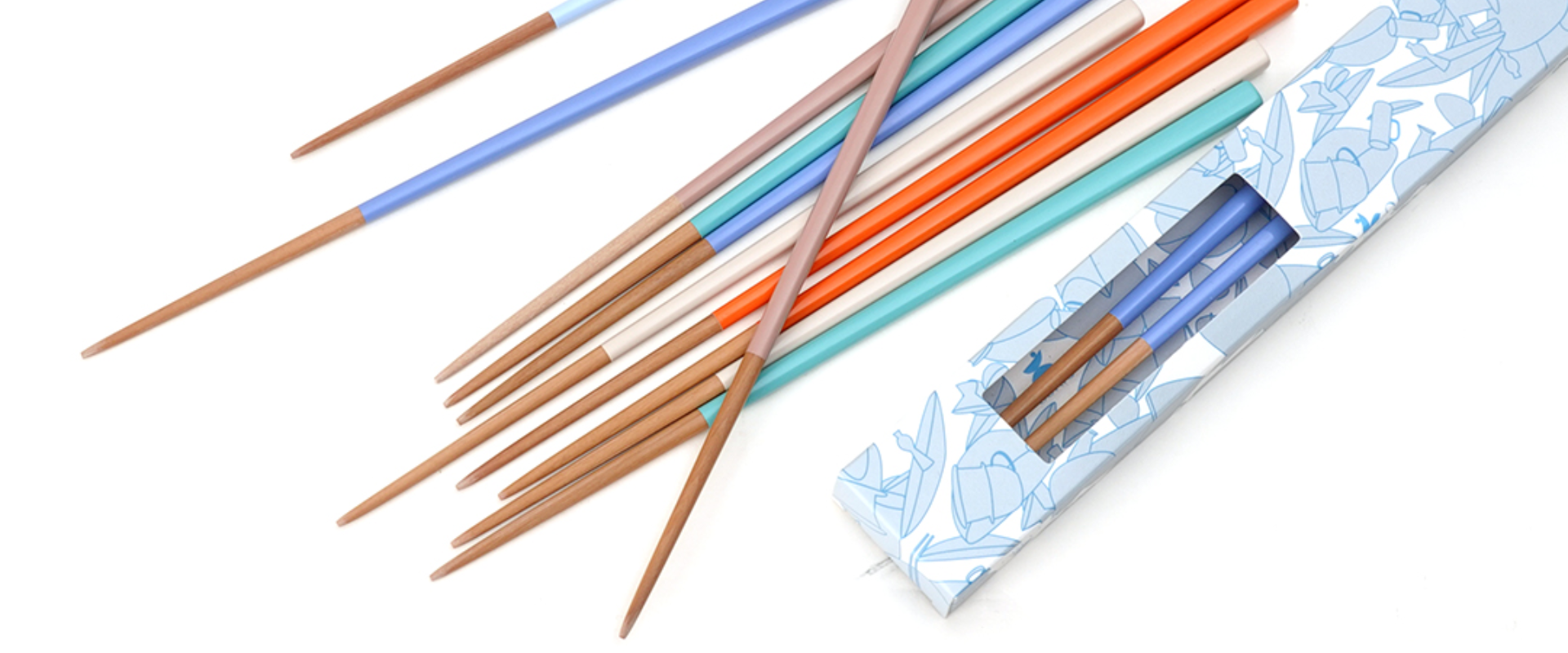
At curio, our chopsticks are the result of thoughtful refinement and cultural dialogue. We drew inspiration from the slender elegance of Japanese chopsticks, designed for delicately sized bites such as sushi and sashimi, and combined it with the strength, stability, and generous proportions of traditional Vietnamese chopsticks. The result is a new, carefully balanced form measuring 23.5 centimetres in length. curio chopsticks retain the classic square-to-round profile and are crafted from natural wood, then finished using Vietnam’s traditional lacquerware techniques. This creates a versatile design that feels equally at home across a wide range of dining traditions. By bringing Vietnamese lacquer art into contemporary craftsmanship, curio offers a collection of chopsticks in vibrant, modern colours that pair beautifully with a variety of tableware. More than a dining utensil, each pair celebrates the beauty of shared meals – making every table more inviting, every meal more enjoyable, and every gathering richer in warmth, connection, and the enduring spirit embodied by chopsticks themselves.
Explore the story of lacquer chopstick craftsmanship with curio.